Download the White Paper
See how CareStations cut per-patient recruitment costs from $806 to $3—and reach the 120 million Americans traditional trial infrastructure can't.
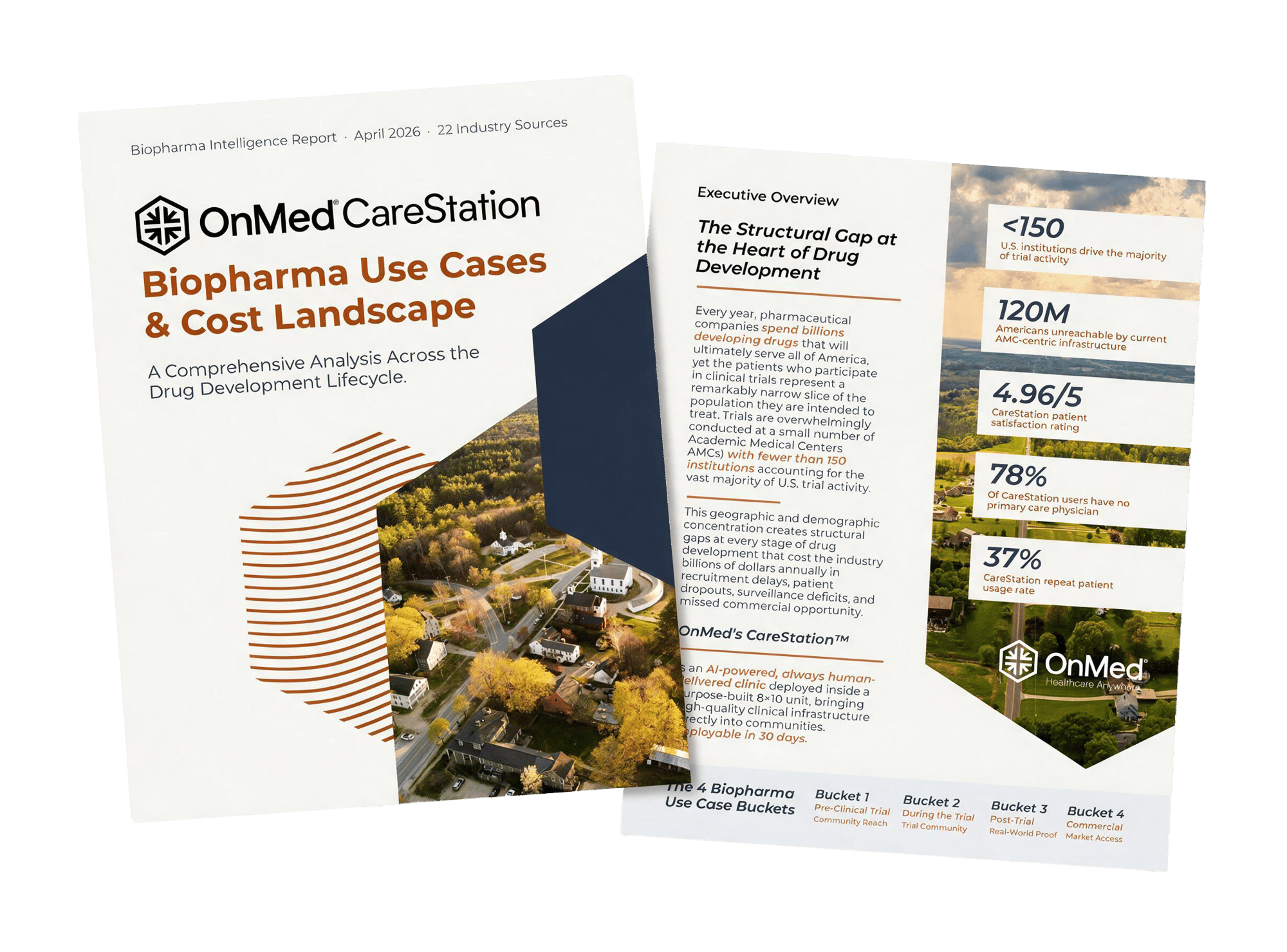
The U.S. drug development model has a structural problem. Fewer than 150 institutions drive the majority of clinical trial activity, only 14% of trial protocols explicitly include diversity considerations, and the industry spends $1.89 billion annually on patient recruitment—before a single drug reaches the patients who need it most. The result is billions lost to recruitment delays, dropout rates, surveillance gaps, and missed commercial opportunity at every stage of the lifecycle.
This White Paper maps the full cost landscape across four stages of drug development—pre-clinical trial, during the trial, post-trial, and commercial—drawing on 22 industry sources to show where the current model breaks down and what community-embedded clinical infrastructure can recover. From reducing trial recruitment cost from $806 to $3 per enrolled participant, to generating real-world evidence from the 120 million Americans invisible to every existing dataset, the OnMed CareStation™ addresses the access gap that telehealth can't solve and AMC-centric infrastructure was never built to reach.