
Download the White Paper
A Comparative Evaluation Framework for Higher Education Advisors.
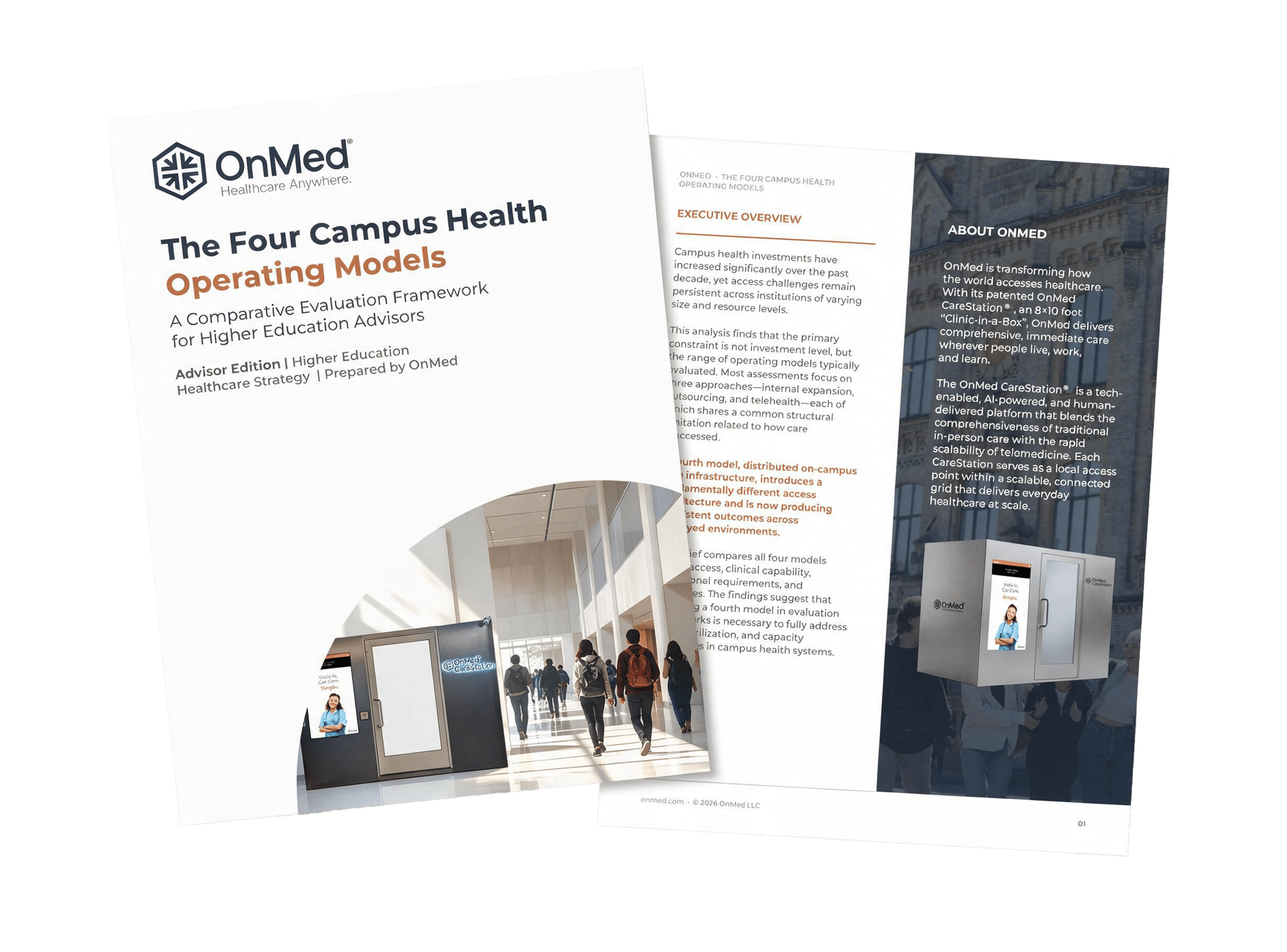
Campus health investments have increased significantly over the past decade. The access gap has not closed.
This analysis finds that the primary constraint is not investment level, but the range of operating models typically evaluated. Most assessments focus on three approaches—internal expansion, outsourcing, and telehealth—each of which shares a common structural limitation related to how care is accessed.
A fourth model, distributed on-campus care infrastructure, introduces a fundamentally different access architecture and is now producing consistent outcomes across deployed environments.
This brief compares all four models across access, clinical capability, operational requirements, and outcomes. The findings suggest that including a fourth model in evaluation frameworks is necessary to fully address access, utilization, and capacity challenges in campus health systems.