
Download the Framework
Universities are not choosing between vendors. They are choosing between operating models.
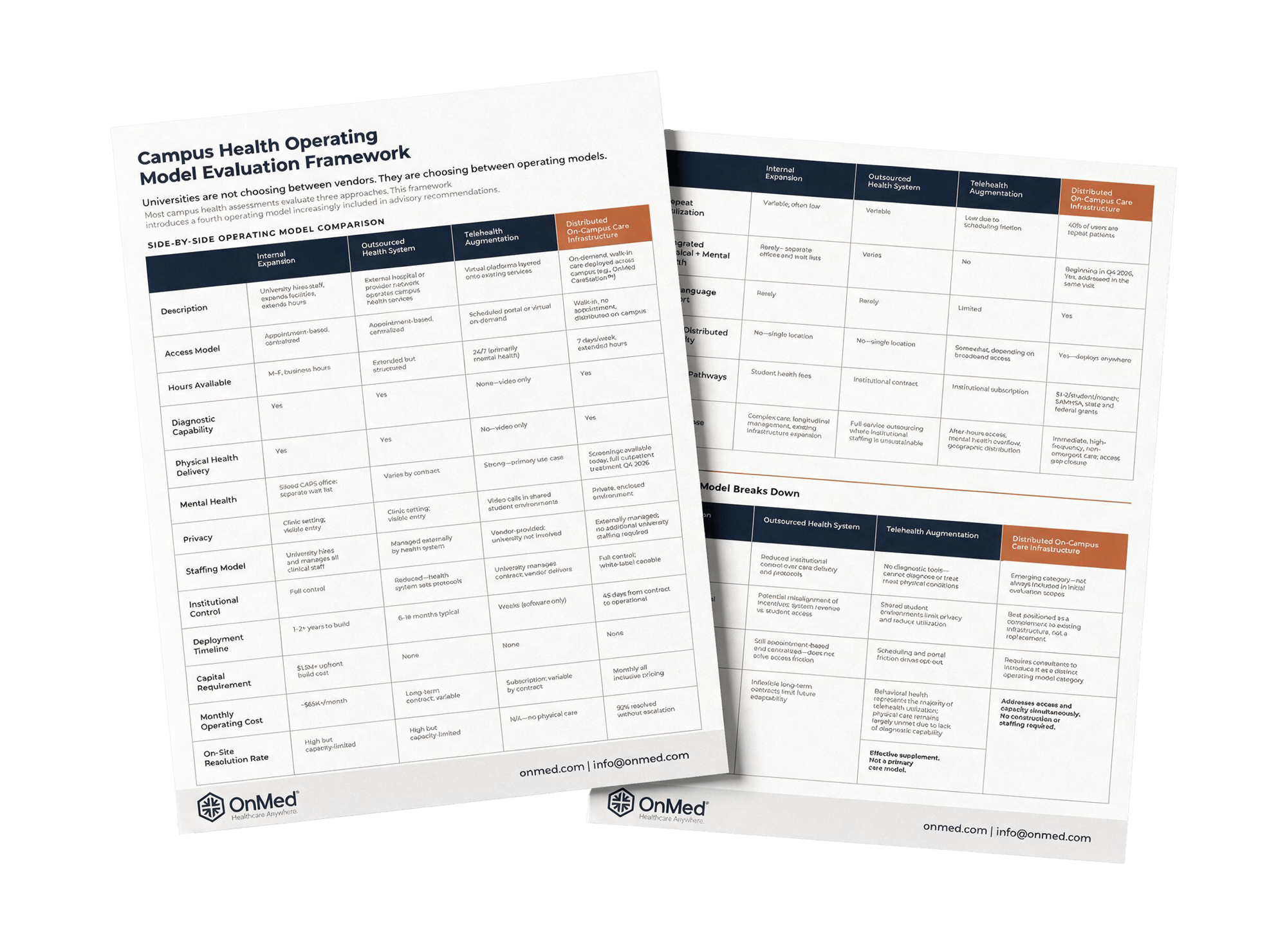
Most campus health assessments evaluate three approaches. This framework introduces a fourth operating model increasingly included in advisory recommendations.
A side-by-side comparison of all four models—internal expansion, outsourced health system, telehealth augmentation, and distributed on-campus care infrastructure—mapped across access, clinical capability, cost, and operational impact. Structured for use in client-facing assessments.
Outcomes data from deployed models:
• 92% of visits resolved on-site without escalation to a specialist, ER, or urgent care
• 40% repeat utilization—meaningful in a population where accessing care at all is the primary barrier
• 33% reduction in overflow burden on the existing on-campus health center
• 25% reduction in campus clinic operational costs