Download the White Paper
Gen Z will make up nearly 30% of your workforce by 2030—get the data on what it takes to attract and keep them.
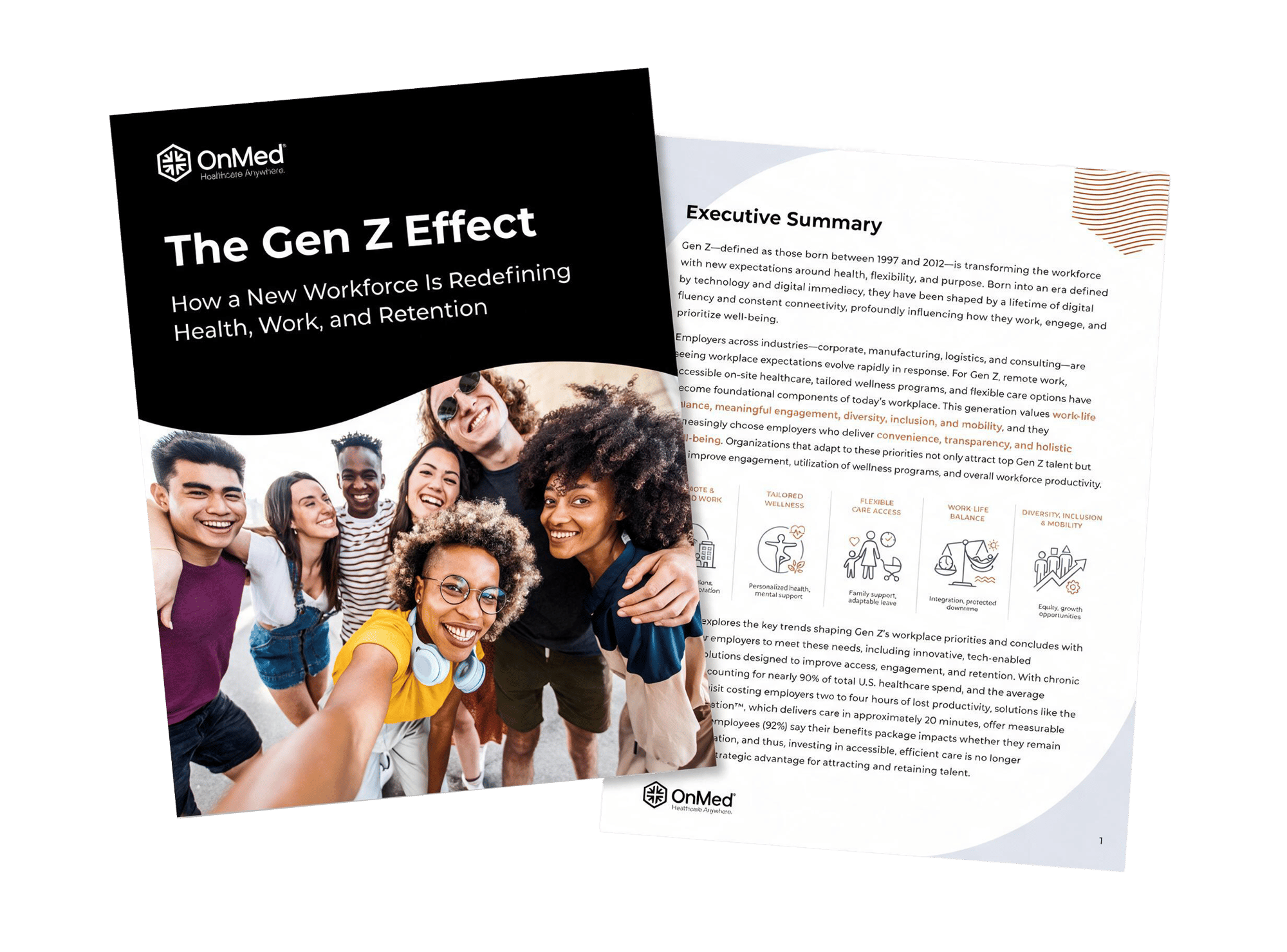
Healthcare access is a non-negotiable for Gen Z. However, while employers are investing heavily in benefits, Gen Z reports the lowest satisfaction with traditional healthcare access.
Appointment wait times, limited mental health availability, and fragmented care navigation clash with the expectations of a generation raised on immediacy and digital convenience. Gen Z is more likely than any other generation to delay care due to inconvenience, cost, or lack of trust in the healthcare system—a pattern that leads to avoidable emergencies, absenteeism, and long-term health risks.
This gap between what employers offer and what Gen Z expects is widening. While organizations focus on cost control and compliance, younger workers prioritize speed, transparency, and seamless digital experiences. Without modern, accessible, tech-enabled care options, employers risk disengagement, turnover, and rising downstream costs.